The 1622 Powhatan Uprising and Its Influence on Northern Neck Settlement
How a pivotal moment in 1622 shaped the future of Virginia and regions like Westmoreland County

On March 22, 1622, a coordinated assault led by Opechancanough, a prominent leader within the Powhatan Confederacy, targeted English settlements throughout the Virginia colony. This event, often referred to as the Powhatan Uprising of 1622, resulted in the deaths of approximately 347 colonists, representing nearly one third of the English population in Virginia at the time.^1 The attacks were concentrated along the James River, where English settlement was most dense, including plantations and outlying communities connected to Jamestown.
The uprising emerged from escalating tensions between the Powhatan peoples and English colonists. In the years following the establishment of Jamestown in 1607, English expansion increasingly encroached upon Indigenous lands, disrupted subsistence systems, and strained diplomatic relationships. While earlier interactions had included trade and periods of cooperation, particularly under the leadership of Wahunsenacawh (Powhatan), these relationships deteriorated as colonial demands for land and resources intensified.^2 The 1622 assault represented a deliberate and organized effort to resist English expansion and to reassert control over Indigenous territories.
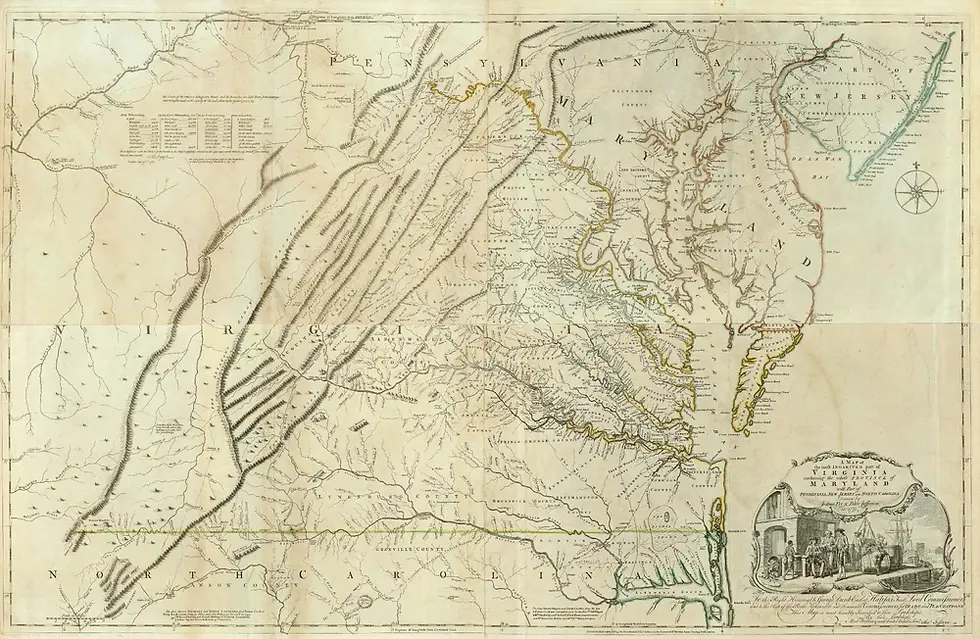
Although the immediate impact of the uprising was concentrated in the Tidewater region along the James River, its long term consequences extended throughout the colony and into areas that were not yet fully settled by the English. At the time of the uprising, the region that would later become Westmoreland County, established in 1653 from Northumberland County, remained largely beyond the primary zone of English occupation. Indigenous communities occupied and utilized this landscape, and English presence in the Northern Neck was limited.^3
In the aftermath of the 1622 uprising, English colonial policy shifted significantly. Settlers consolidated into more defensible locations, and expansion into frontier regions slowed. The uprising marked the beginning of a more sustained period of conflict between English colonists and Indigenous groups, characterized by retaliatory campaigns and increasingly aggressive territorial expansion.^4 These developments altered the trajectory of colonization in Virginia.
As English settlement resumed and expanded in the mid to late seventeenth century, including into the Northern Neck, it did so within a context shaped by the legacy of the 1622 uprising. Relations between English settlers and Indigenous peoples had fundamentally changed, moving away from earlier patterns of negotiation and exchange toward displacement and control. Land acquisition in regions such as present day Westmoreland County was influenced by these evolving dynamics, as colonial authorities and settlers sought to secure territory in ways that reflected both caution and assertion of dominance.^5
The significance of the 1622 uprising, therefore, extends beyond the immediate sites of violence. It represents a pivotal moment in early Virginia history that reshaped colonial strategy, Indigenous relations, and patterns of settlement. For the Northern Neck and Westmoreland County, the uprising forms part of the broader historical framework that influenced when and how the region was settled, as well as the conditions under which its early communities developed.
Footnotes
Edward Waterhouse, A Declaration of the State of the Colony and Affaires in Virginia (London, 1622); Library of Congress, “Powhatan Indian Attack of 1622.”
Helen C. Rountree, The Powhatan Indians of Virginia: Their Traditional Culture (Norman: University of Oklahoma Press, 1989).
James Horn, A Land As God Made It: Jamestown and the Birth of America (New York: Basic Books, 2005).
Karen Ordahl Kupperman, The Jamestown Project (Cambridge, MA: Harvard University Press, 2007).
April Lee Hatfield, Atlantic Virginia: Intercolonial Relations in the Seventeenth Century (Philadelphia: University of Pennsylvania Press, 2004).